The Day Nova Tried One Tiny Step: Teaching Kids the TRY Skill
Some skills feel too big at first.
Reading a new book.
Joining a game.
Cleaning a messy room.
Trying again after a mistake.
Asking for help.
Practicing something that does not feel easy yet.
For kids, these moments can quickly turn into big feelings. A hard task can start to sound like:
“I can’t do this.”
“I’m bad at this.”
“It’s too much.”
“I’ll never get it.”
“I don’t want to try.”
That is where the TRY skill can help.
TRY is a simple social-emotional learning tool that teaches kids how to approach hard things in smaller, safer, more manageable steps.
At Little Cryptid Compass, TRY stands for:
T — Tiny task
R — Repeat effort
Y — Yield steady growth
The TRY skill helps kids learn that growth does not usually happen all at once. It happens through small steps, repeated practice, and noticing progress over time.
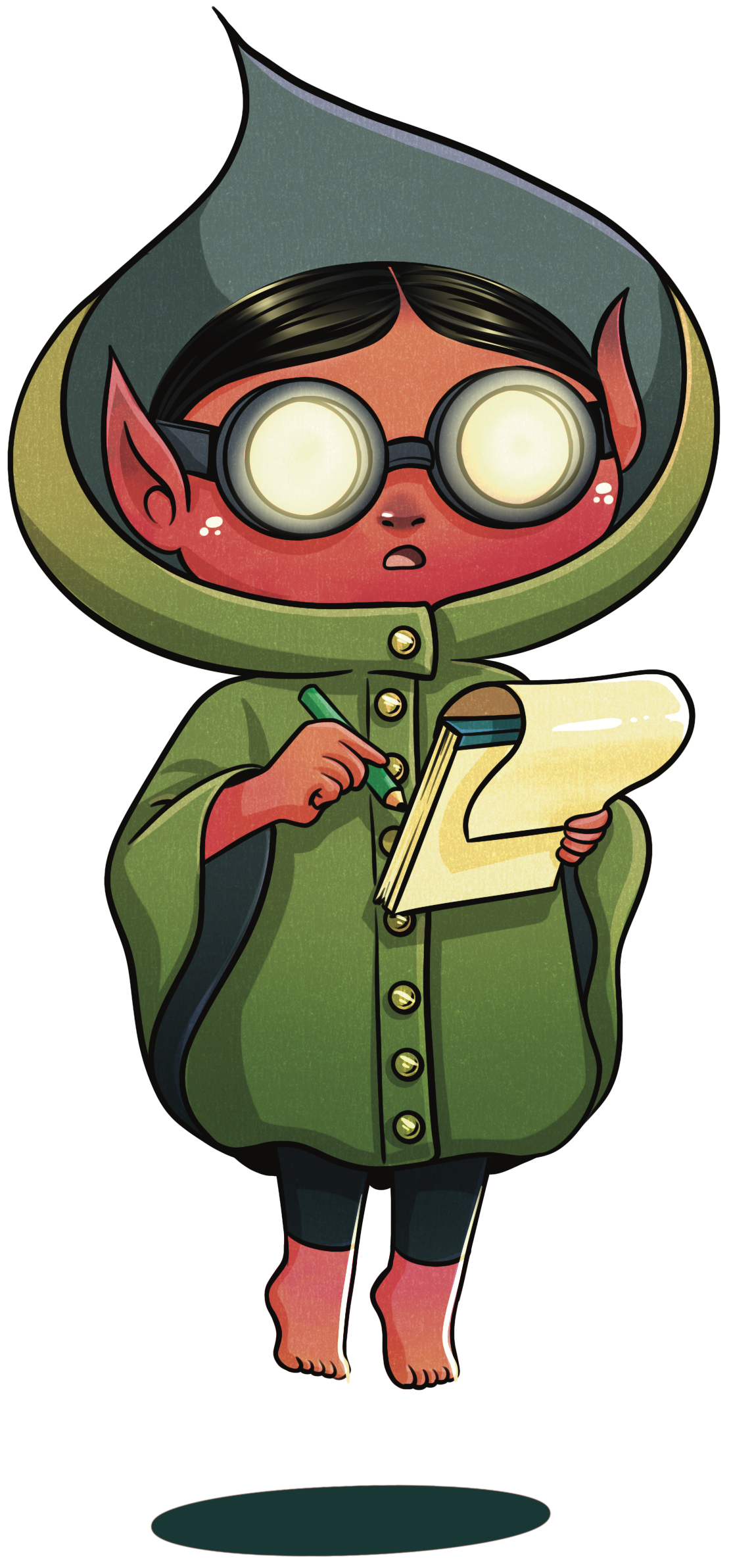
Meet Nova Flatwoods
Nova Flatwoods is thoughtful, imaginative, and full of big ideas. She can picture amazing possibilities in her mind, but sometimes the first step feels too big to begin.
When Nova cares about doing something well, her worries can get loud. She may freeze, overthink, or feel like she has to get everything right the first time. For Nova, trying is not always about effort. Sometimes it is about making the task small enough to start.
That is why Nova is a great guide for the TRY skill.
Through Nova, kids can see that feeling unsure does not mean they are failing. It may just mean the task needs to be broken into a tiny first step. With a little support, repeated practice, and time to notice growth, Nova learns that confidence can grow one small try at a time.
Nova reminds us: You do not have to do the whole thing at once. One tiny step still counts as trying.
What Is the TRY Skill?
The TRY skill is a kid-friendly way to practice building mastery, confidence, and persistence.
It does not mean “try harder” in a harsh or pressure-filled way.
It means:
Make the task smaller.
Practice more than once.
Notice the growth that slowly shows up.
TRY helps kids move away from all-or-nothing thinking. Instead of seeing a challenge as a pass-or-fail moment, kids can learn to see it as practice.
T: Tiny Task
The first step is Tiny task.
When something feels too big, the goal is to shrink it.
A tiny task is the smallest useful step a child can take toward the bigger goal.
For example:
Instead of “clean your whole room,” try “put five toys in the bin.”
Instead of “write the whole paragraph,” try “write one sentence.”
Instead of “join the group,” try “stand nearby and watch for one minute.”
Instead of “practice the whole song,” try “play the first line twice.”
Instead of “calm down right now,” try “take one slow breath.”
Tiny tasks help kids get started without feeling swallowed by the whole mountain.
A helpful adult phrase is:
“What is the smallest step we can try first?”
R: Repeat Effort
The second step is Repeat effort.
Kids often think that if something does not work right away, it means they failed. TRY teaches that one attempt is not the whole story.
Repeat effort means practicing again, adjusting, and giving the brain and body more chances to learn.
This does not mean forcing a child to keep going when they are overwhelmed. It means helping them return to the skill in a manageable way.
For example:
“Let’s try one more small step.”
“Let’s practice for two minutes, then take a break.”
“Let’s try it a different way.”
“Let’s repeat the part that almost worked.”
“Let’s come back to it after your body has a reset.”
Repeat effort teaches kids that practice is part of learning, not proof that they are behind.
Y: Yield Steady Growth
The third step is Yield steady growth.
Yield means something grows or comes from the effort.
In TRY, the result is not always instant success. The result might be confidence, courage, problem-solving, patience, or a little more skill than yesterday.
Steady growth can sound like:
“I did one more step than last time.”
“I asked for help instead of quitting.”
“I tried again after a mistake.”
“I stayed with it for two minutes.”
“I noticed what made it hard.”
“I did not finish, but I started.”
Kids need help noticing these small wins. Without adult support, they may only notice what went wrong.
A helpful adult phrase is:
“What grew because you tried?”
A Little Cryptid Story: Nova Tries One Tiny Step
At Poplar Hollow, Nova Flatwoods wanted to help build a glowing trail sign for the campers.
The sign looked amazing in her imagination. It would have stars, arrows, letters, colors, and a tiny glowing moon at the top.
But when Nova looked at the blank board, her shoulders lifted.
Her pencil hovered.
Her thoughts got loud.
“What if I mess it up?” she whispered.
“What if everyone sees it?”
“What if I cannot make it look right?”
The project felt too big.
Keeper Sal Squatch sat nearby and said, “Maybe this is a good time to TRY.”
Nova blinked. “I am trying.”
Sal nodded. “I know. TRY does not mean push harder. It means start smaller.”
Together, they checked the steps.
Tiny task: Nova drew one small star in the corner.
Repeat effort: She practiced three more stars on scrap paper.
Yield steady growth: By the end, Nova noticed her hand felt steadier.
The whole sign was not finished yet.
But something had changed.
Nova had started.
And starting made the next step feel possible.
Why TRY Helps Kids Build Confidence
Confidence does not always come before action. Sometimes confidence grows after a child experiences themselves taking a small step.
TRY helps children build confidence by making effort visible.
Instead of saying:
“You can do it.”
TRY helps adults say:
“Let’s find one tiny part you can do.”
“Let’s repeat the part that helps.”
“Let’s notice what grew.”
This matters because some kids do not believe encouragement until they have evidence. TRY gives them evidence.
A small step becomes proof.
“I started.”
“I practiced.”
“I got a little better.”
“I can try again.”
TRY Is Especially Helpful For Kids Who Get Overwhelmed
TRY can support kids who struggle with:
perfectionism
frustration
task avoidance
low confidence
anxiety around mistakes
big reactions to hard tasks
giving up quickly
negative self-talk
learning new skills
returning to a task after disappointment
The goal is not to make every child love every challenge. The goal is to help them feel less trapped by the challenge.
TRY gives kids a way to approach hard things without needing to feel ready, perfect, or fearless.
How Adults Can Teach the TRY Skill
When a child feels stuck, avoid starting with a lecture. Start with the size of the task.
Try saying:
“This feels big. Let’s make it tiny.”
Then ask:
T — Tiny task:
“What is one small part we can do first?”
R — Repeat effort:
“What can we practice again in a small way?”
Y — Yield steady growth:
“What grew because you tried?”
This keeps the focus on process, not performance.
TRY Skill Scripts for Parents, Teachers, and Counselors
Here are simple phrases adults can use.
When a child says, “I can’t do it”:
“Let’s not do the whole thing yet. Let’s find the tiniest first step.”
When a child gives up after one try:
“One try gives us information. A repeat try helps us practice.”
When a child is afraid of messing up:
“Mistakes can show us what to try next.”
When a child compares themselves to others:
“We are looking for your next step, not someone else’s finish line.”
When a child makes progress but does not notice:
“Pause. Something grew there. What can we name?”
Simple TRY Activity for Kids
Create a three-column page with these headings:
Tiny Task
Repeat Effort
Steady Growth
Have the child choose one skill, task, or challenge.
Examples:
reading a page
cleaning a space
practicing handwriting
joining a game
calming their body
asking for help
trying a new food
finishing homework
learning a song
solving a problem with a friend
Then help them fill in the page.
Tiny Task: What is the smallest step?
Repeat Effort: How can I practice it again?
Steady Growth: What changed, improved, or became easier?
For younger kids, let them draw each step. For older kids, let them write or journal their answers.
TRY and Social-Emotional Learning
TRY supports several important SEL skills:
Self-awareness:
Kids notice what feels hard and what thoughts show up.
Self-management:
Kids practice breaking tasks into smaller steps.
Responsible decision-making:
Kids choose a next step instead of shutting down or reacting.
Growth mindset:
Kids learn that ability can grow with practice.
Emotional regulation:
Kids reduce overwhelm by making the challenge more manageable.
TRY is especially useful because it does not require a long lesson. It can be used in the moment, during real-life frustration.
TRY Is Not About Forcing Kids Through Distress
It is important to use TRY with care.
TRY should not be used to pressure kids to ignore exhaustion, fear, sensory overload, or real limits.
Sometimes the tiny task is taking a break.
Sometimes the repeat effort is returning later.
Sometimes the growth is asking for help.
Sometimes the next step is noticing, “My body is not ready yet.”
TRY works best when it is encouraging, flexible, and connected to the child’s actual capacity.
The message is not:
“Keep going no matter what.”
The message is:
“Let’s find a step that is possible.”
Final Takeaway
The TRY skill helps kids build confidence through small, repeatable steps.
When a task feels too big, TRY gives kids a way forward:
Tiny task: Make it smaller.
Repeat effort: Practice again in a manageable way.
Yield steady growth: Notice what is growing.
Kids do not need to conquer the whole mountain in one leap.
Sometimes the bravest thing is one tiny step.
And one tiny step is still a try.
